Guide · Wetsuit Advice
Not sure which wetsuit to buy? These tips will help you decide.
Fit, buoyancy, flexibility, and temperature range: use this checklist to find the wetsuit that suits you and your goals.
1. Why a wetsuit improves your performance
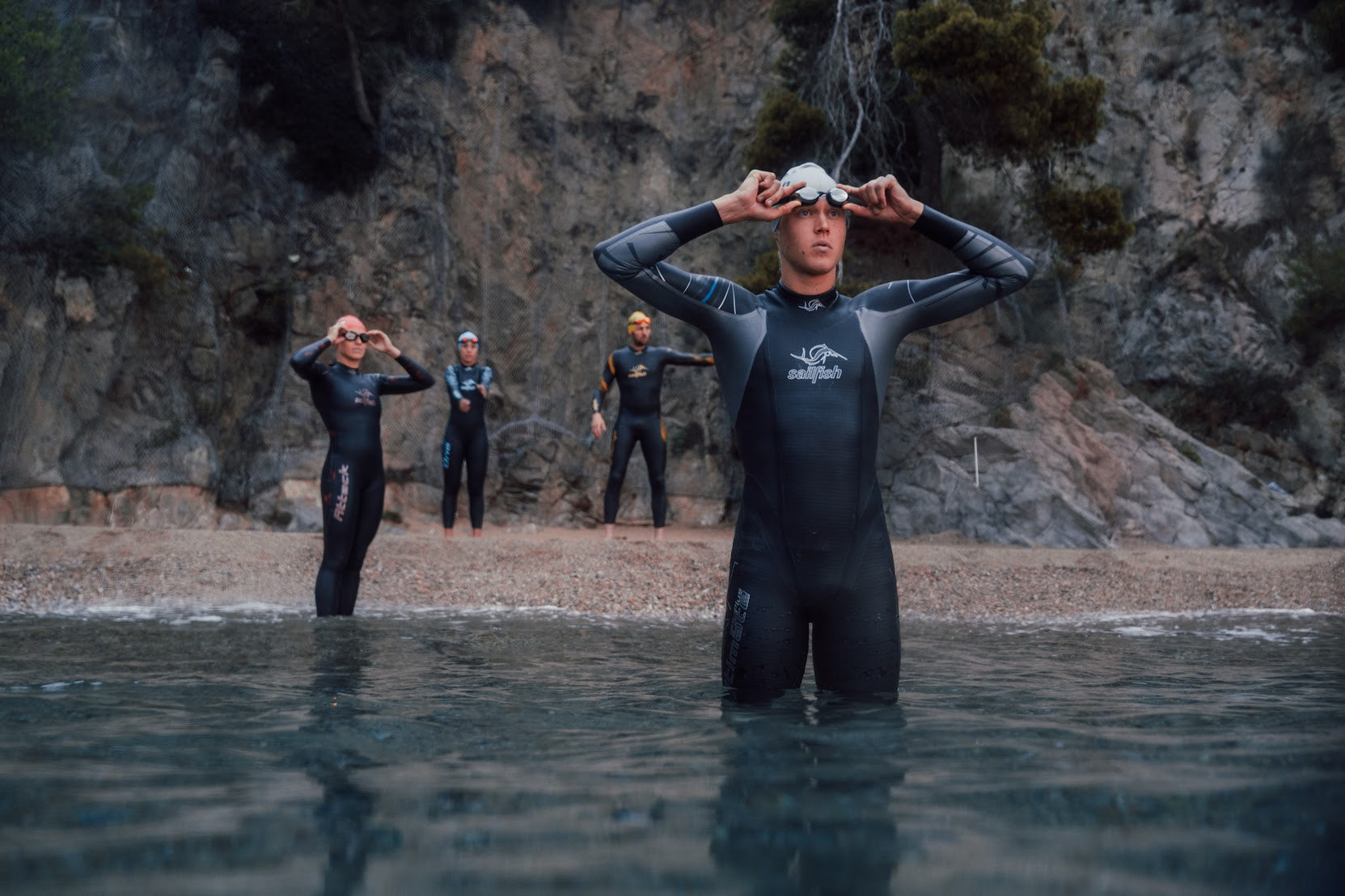
A good wetsuit stabilises your body position in the water, increases buoyancy, and reduces drag. This saves energy and makes you a more efficient swimmer – whether it's your first triathlon or a personal best attempt. A wetsuit also keeps you warm and gives you confidence in open water.
Remember: the best wetsuit is the one that fits you – not the most expensive one.
2. The buying checklist: 9 points
1) Fit & sizing
- Fit: Tight with no folds at the armpits, back, or groin. Shoulders free, chest not constricted.
- Arm/leg length: Shortening is possible; better too long than too short.
- Freedom of movement: Full shoulder rotation with no pulling sensation at the neck.
2) Buoyancy
- Leg-heavy? More buoyancy in the hip/leg area helps you sit higher in the water.
- Balanced? Even buoyancy for a neutral body position and a natural feel.
3) Flexibility
- Shoulder panel: Thinner, ultra-flexible material protects the rotator muscles.
- Core stability: Slightly firmer material at the torso can give you more support and guidance.
4) Material thickness & temperature
- 3–5 mm: More warmth and buoyancy for cold water.
- 1.5–3 mm: More mobility for technique-focused swimming and warmer conditions.
5) Zipper system
- Back zip: The classic – robust and straightforward.
- Front/Breakaway: Fast transitions and a different feel – try both to see what works for you.
6) Your swimming style & goal
- Beginner: A little more buoyancy for stability and confidence.
- Ambitious: Balance of flexibility (shoulders) and support (torso).
- Elite: Maximum mobility, precise fit, second-skin feel.
7) Use case
- Open water & triathlon: Focus on thermal protection and buoyancy.
- Lake training: Durability, comfort, and easy on/off.
8) Budget & value for money
- Mid-range: Excellent value for most athletes.
- Top models: High-end materials for maximum performance.
9) Service & after-sales
- Advice: Personal recommendations help avoid costly mistakes.
- Repairs & spare parts: Extend the life of your wetsuit.
3. Comparison: Buoyancy, Flexibility & Thermal Protection
| Property | More buoyancy | More flexibility | More thermal protection |
|---|---|---|---|
| Best for | Leg-heavy swimmers, beginners | Technique-focused, ambitious/elite athletes | Cold water, long distances |
| Advantage | Stable body position, less swerving | Natural arm stroke, less fatigue | Warmer, longer comfort zone |
| Disadvantage | Can feel too high in the water | Less buoyancy, requires solid technique | Slightly less mobility |
4. How to try on a wetsuit properly
- Put it on correctly: Pull the wetsuit up into the groin first, working the material upward in small steps, smoothing out any folds.
- Check the shoulders: Lift your arms above your head as if you were doing the front crawl. Nothing should pull or pinch.
- Check breathing: Take a deep breath – your chest should not feel restricted.
- Test in the water: Do a short warm-up swim. Pay attention to body position, arm stroke, and how it feels at the neck and shoulders.

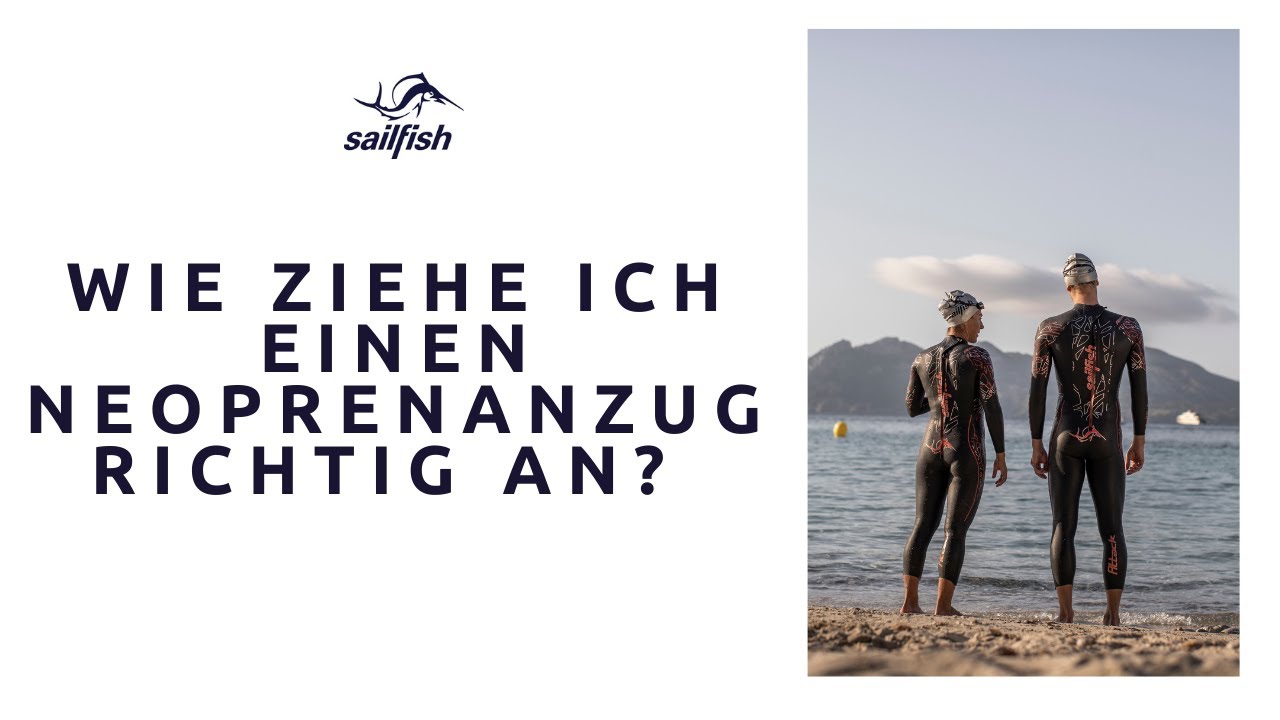
5. How do I put on a wetsuit correctly?
sailfish walks you through putting on your wetsuit step by step – for the perfect fit and maximum performance in the water.
6. Not sure? Test your wetsuit before you buy
The best way to know if a wetsuit is right for you is to swim in it. Our experts are on hand to help you put it on, give technique tips, and recommend the wetsuit that matches your goals.
Note: SwimTour registration costs €25, which is fully credited towards the purchase of a wetsuit.
7. FAQ: Common questions
How do I find the right size?
Use the size chart as your starting point based on your height and weight. If you're between sizes, the fit at the shoulders and chest is what matters most – it should be snug but allow full movement. When in doubt, our team or a test swim can help you decide.
How much buoyancy do I need?
Do your legs tend to sink during the kick? Then extra buoyancy in the hip and leg area will help you sit higher in the water. If you already swim with a stable position, a balanced buoyancy with a focus on flexibility is often the better choice.
From what water temperature do I need a wetsuit?
As a general rule: below 22 °C, a wetsuit is permitted and recommended in triathlon. Below 16 °C, it's almost essential for most swimmers. In very cold water (below 12 °C), we recommend adding neoprene socks and a swim cap.
How do I care for my wetsuit properly?
Rinse with fresh water after every use, turn inside out to dry (keep out of direct sunlight), and store flat or on a wide hanger. Avoid sharp objects and long fingernails when handling the suit.
8. Care & durability
With the right care, your wetsuit will last many seasons. Rinse it thoroughly after swimming, use a suitable wetsuit shampoo when needed, and let it dry in the shade. Small tears can often be repaired – which saves money and is better for the environment.
Your next step
Want to find the wetsuit that's right for you? Test our wetsuits in the water or get personalised advice. We're here to help you find your perfect fit – enjoy your swim.