5 Tips to Swim Faster in Open Water
Swimming faster in open water doesn’t automatically mean swimming harder.
Often, it’s small adjustments in technique and behavior that make the biggest difference. That’s exactly what you should focus on.
Here are five tips you can apply immediately – and feel right away.
Table of Contents
- 1. Focus on your body position
- 2. Stay calm with your breathing
- 3. Improve your navigation
- 4. Find your rhythm
- 5. Use drafting
- Frequently asked questions
1. Focus on your body position
A stable, horizontal body position is the foundation of everything.
If your legs sink, unnecessary drag is created. You lose energy and speed.
The better your position in the water, the more efficiently you swim – often without using more force.
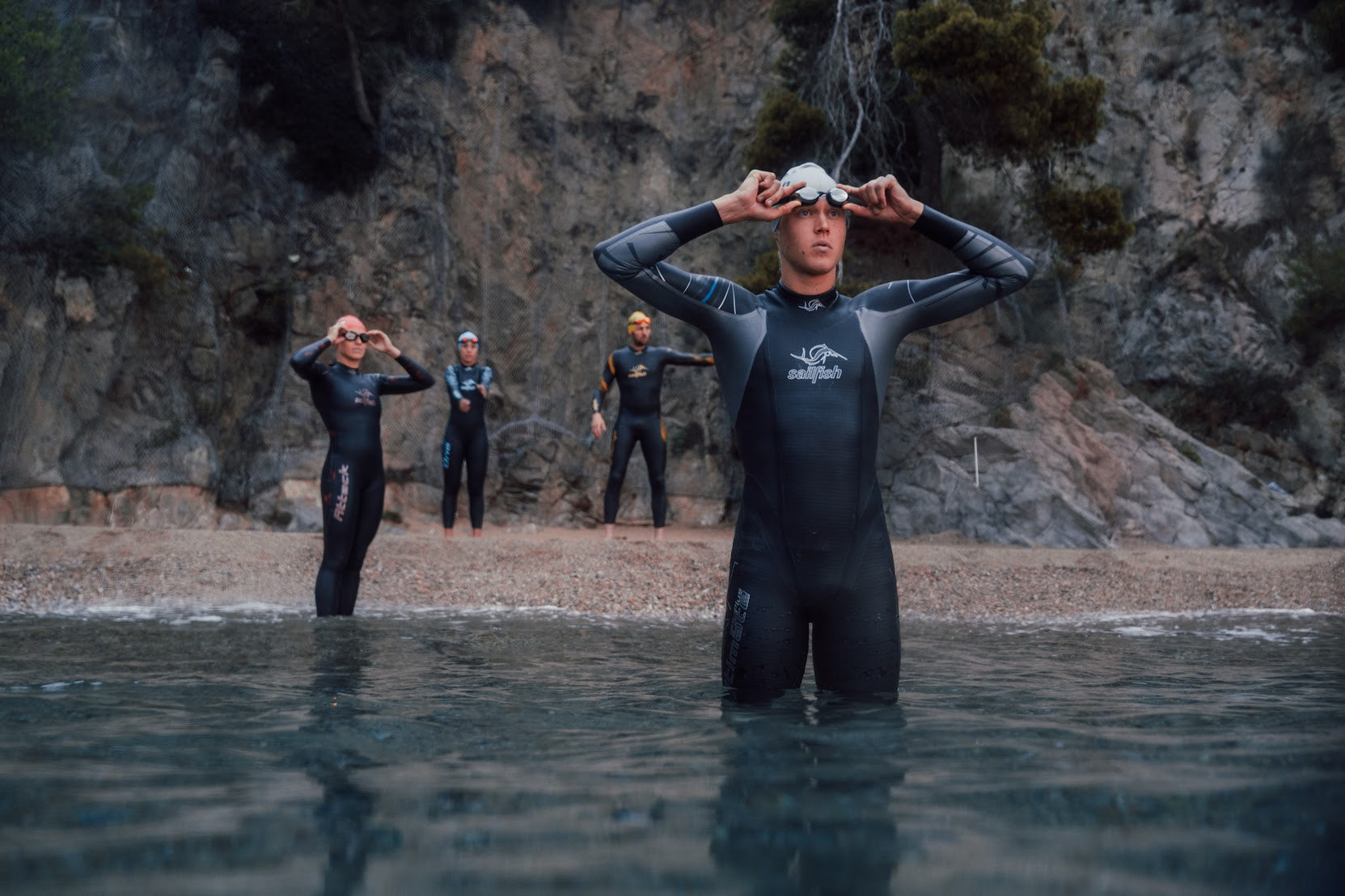
A well-fitting wetsuit can support this and significantly improve your body position.
2. Stay calm with your breathing
Many swimmers become tense in open water – and that costs time.
Calm, controlled breathing brings stability and helps you maintain your rhythm.
- Breathe regularly
- Avoid rushed movements
- Stay relaxed, even under stress
3. Improve your navigation
In open water, you need to navigate yourself. Swimming off course quickly costs valuable time.
The key: look forward regularly, but efficiently.
- Look forward briefly every 6–10 strokes
- Lift your head only slightly
- Hold your line instead of constantly correcting
Every unnecessary change of direction costs energy and speed.

4. Find your rhythm
A consistent rhythm is more important than maximum speed in open water.
Too many pace changes disrupt your movement and cost energy.
Find your pace – and keep it steady.
5. Use drafting
Drafting means swimming in the slipstream of another swimmer.
This can save you up to 20–30% of your energy.
- Swim slightly behind and to the side of another swimmer
- Maintain a consistent distance
- Use the reduced water resistance
It’s one of the most effective techniques in open water – and often underestimated.
Frequently asked questions
How do I get faster in open water?
By improving technique, body position, and navigation – not by using more force.
How important is technique compared to endurance?
Technique is the foundation. Without it, even more endurance has limited impact.
What does drafting actually do?
You save energy while maintaining your pace – a clear advantage in racing.
Conclusion: Swimming faster doesn’t mean swimming harder – it means swimming smarter.