


In cycling, drafting is banned at most triathlons. In the water, it's explicitly allowed, and yet most athletes leave this advantage completely untouched. Drafting while swimming is one of the few legal ways to save noticeable energy without swimming any faster.
What is drafting in swimming?
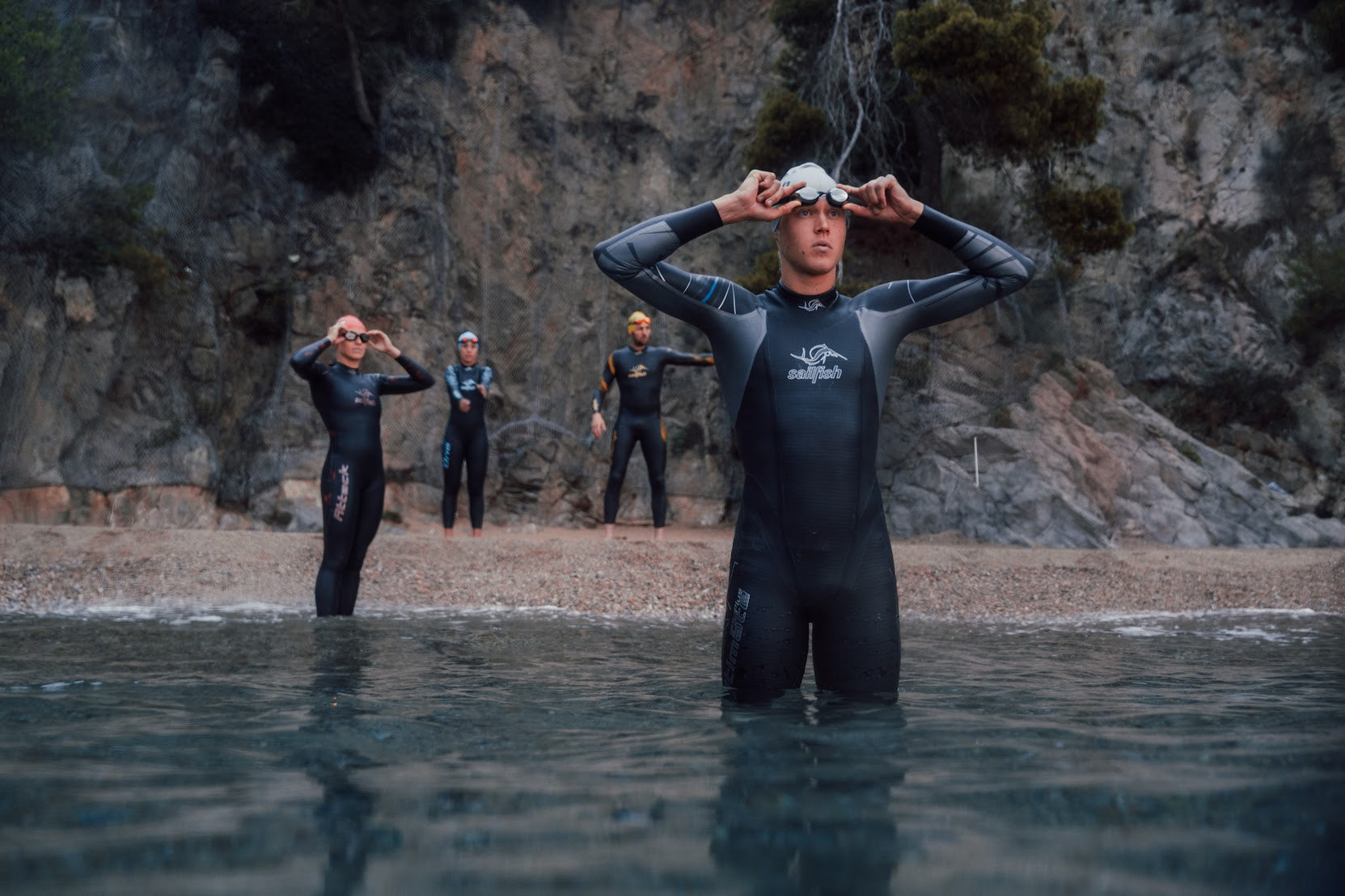
Drafting means moving in the slipstream of another swimmer. The swimmer ahead displaces the water, creating a zone of reduced drag and slight pull behind them. Swim there and you need less effort at the same pace, or you swim faster for the same effort. Studies show energy savings well into the double-digit percentage range, depending on position and distance.
Unlike on the bike, drafting in the swim is explicitly permitted at virtually every triathlon, whether sprint or long distance. It's not a grey area, it's simply part of race strategy, and you should be using it.
The two positions that work
Directly behind the feet: The classic position, your head stays about half an arm's length behind the lead swimmer's feet. The pull is strongest here, but so is the risk of constantly hitting feet. Swimming too close costs concentration and annoys the person ahead, too far back and you lose the effect entirely.
Beside the hip: You swim slightly offset, level with the other swimmer's hip or thigh. The advantage: better visibility, less contact, and easier breathing. The pull is slightly weaker than directly behind the feet, but far less stressful, especially if you don't have much open-water experience yet.

Choosing the right swimmer to follow
The biggest mistake isn't the position, it's the choice. Latch onto someone significantly faster and you'll burn out in the first few minutes. Latch onto someone too slow and you lose time without noticing right away. Find someone marginally faster than your own comfortable pace, just enough to stay challenging without tipping into the red.
A second point people often overlook: the swimmer ahead needs to actually swim straight. Follow someone who sights badly and zigzags, and you'll save energy while covering the longer distance. Check your own line briefly every few strokes instead of following blindly.
Why sighting still matters when drafting
Drafting tempts you to hand over navigation entirely. That backfires the moment the group breaks apart at the buoy or the swimmer ahead suddenly drops off. Keep sighting regularly, just less often than when swimming alone, roughly every eight to ten strokes instead of every four to six.
A pair of goggles with a wide field of view in open water helps here, even with a low head position. The sailfish Breeze is built exactly for that: the wide viewing angle makes it easier to keep the swimmer ahead in sight without lifting your head fully and losing your body position.
Practice drafting in training, not on race day
Swimming in someone's slipstream feels different from swimming alone: tighter, busier, with constant contact and spray in your face. Experience that for the first time on race day and you'll tense up. Practice it in group training instead, alternating between leading and following, so you know both roles and stay calm in the race even when things get chaotic around you.
Frequently asked questions about drafting in open water
Is drafting allowed during the swim in triathlon?
Yes. Unlike on the bike, drafting during the swim is explicitly permitted at virtually every triathlon.
How much energy does drafting in the water save?
Depending on position and distance, energy use can be reduced noticeably, most of all directly behind the lead swimmer's feet.
Which position is best?
Directly behind the feet gives the strongest pull, beside the hip is less stressful and easier to read, especially for less experienced open-water swimmers.
Can I skip sighting when drafting?
No. Keep sighting regularly, just less often, otherwise you risk following someone who's off course themselves.
Enjoy your swim.


Leave a comment