


Every two strokes? Every three? Or as rarely as possible?
There is no single perfect breathing rhythm in freestyle. What matters most is that you get enough air and keep your technique stable. For many swimmers, breathing every two strokes works best at higher intensities. Breathing every three strokes is especially useful for training both sides.
What do 2-stroke, 3-stroke and 4-stroke breathing mean?
With 2-stroke breathing, you breathe after every second arm stroke and therefore always to the same side. With 3-stroke breathing, you automatically alternate between left and right. With 4-stroke breathing, you breathe after every fourth stroke and again to the same side.
Which option makes sense mainly depends on your pace and your training goal.

2-stroke breathing: useful at higher intensity
When you swim faster, your oxygen demand increases. That is why breathing every two strokes is the simplest option for many swimmers during harder sessions or races.
You get air regularly and can keep your rhythm more easily. The only downside is that you keep breathing to the same side.
That is why it is worth practising your other side during training as well. It keeps you flexible and prevents you from becoming completely dependent on one breathing side.
3-stroke breathing: train both sides
With 3-stroke breathing, you automatically alternate between left and right. This helps you train your rotation on both sides and become more flexible when breathing.
That is especially useful in open water. Sun, waves, other athletes or the position of a buoy can suddenly make one side much more comfortable than the other.
At higher intensities, however, breathing every three strokes may not give you enough air. In that case, switching to a 2-stroke rhythm makes perfect sense.
4-stroke breathing: more for technique than racing
Breathing every four strokes can be useful during technique work. It gives you more time to focus on body position, rotation and a smooth stroke.
For longer or harder efforts, this rhythm is not necessary for most swimmers. Breathing less often does not automatically make you faster.
If you notice that you become rushed at the end of the breathing cycle or your technique starts to break down, you are probably simply breathing too little.
Which breathing rhythm works best for triathlon?
In triathlon and open water, flexibility matters more than following a fixed pattern.
Many athletes mainly use 2-stroke breathing to their preferred side and regularly add breaths to the other side. That gives you enough air while still allowing you to adapt to what is happening around you.
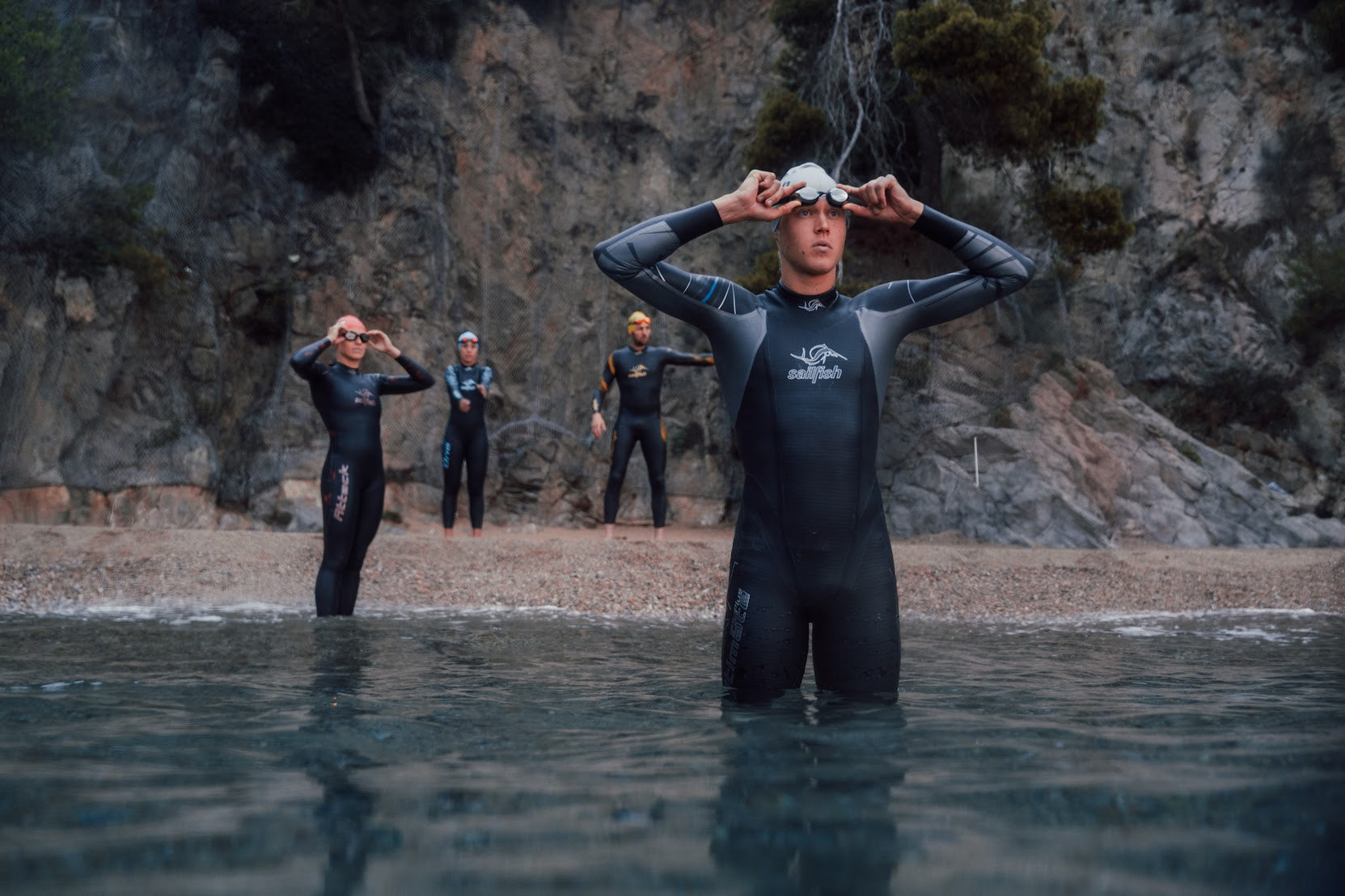
Orientation also plays a major role in open water. Goggles with a wide field of vision can help you keep your line and other swimmers in view. For outdoor training, the sailfish Breeze is designed for a wide field of vision and good orientation in the water.
Breathe out calmly underwater
One thing makes a big difference in freestyle: do not hold your breath underwater.
Exhale steadily into the water during the stroke. When you turn your head to the side, you only need to inhale. This makes the movement calmer and helps you keep your rhythm.
Also try not to lift your head more than necessary. Rotate it only as far as needed for a clean breath.
2, 3 or 4 strokes – what is the best choice?
For fast sessions and racing, 2-stroke breathing works best for many swimmers. You get air regularly and can stay stable even at higher intensity.
3-stroke breathing is especially useful in training because it automatically includes both sides. 4-stroke breathing can be useful for technique work, but it is not a must.
Most importantly, your breathing rhythm should match your pace and allow you to keep your technique clean.
Enjoy your swim.


Leave a comment