In the pool you confidently swim your laps, but in a lake or the sea, suddenly everything feels different. No wall, no black line on the bottom, no clear water. The switch from the pool to open water is a real hurdle for many swimmers, but very manageable with the right approach. Here are the key steps.
Why open water feels so different
In open water, you're missing almost all the pool's orientation aids: no lane markings, no wall to push off, often no visible bottom. Add waves, temperature, current, and sometimes other swimmers. Feeling uncertain at first isn't a sign of poor fitness, but a completely normal reaction to a new environment. The key is to get used to it step by step, rather than swimming the long loop right away.
Step 1: Arrive calmly and acclimatize
Don't just dive in. Enter the water slowly, wet your face and neck, and get used to the temperature. That first contact with cool water can speed up your breathing in particular, which settles after a minute or two. Start with calm swimming near the shore before heading further out.
Step 2: Practice sighting

In the pool the line on the bottom shows you the direction; in open water you have to orient yourself. So-called sighting, briefly lifting your head forward to line up a target, is the most important new skill. Practice it from the start: lift your eyes just above the surface, find a reference point, immediately submerge again. Fixed, tall points on land work better than small buoys.
Step 3: Get used to body position in a wetsuit
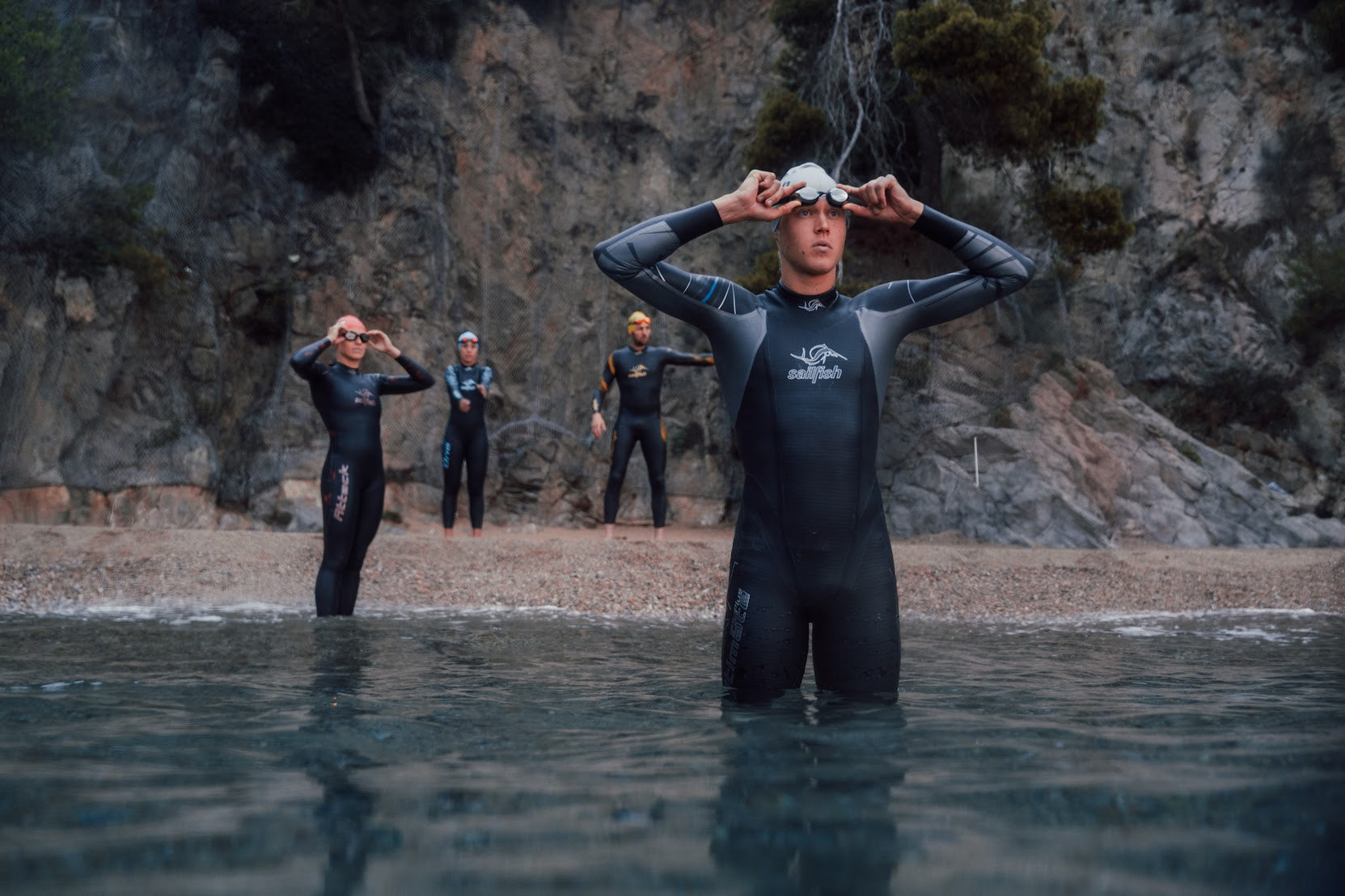
Most people swim in open water with a wetsuit, and it noticeably changes your feel in the water: more buoyancy, a higher leg position, and a different pull sensation. Deliberately swim your first open-water sessions in the wetsuit to get used to it, rather than getting in with it for the first time on race day. If you don't have your own yet, our wetsuit collection has models from entry-level to top of the range.
Step 4: Safety first
Never swim alone in open water, especially at the start. A safety buoy makes you visible to boats and others and serves as buoyancy support if you need a break, and especially during the acclimatization phase it provides a noticeable sense of security. Stay in a manageable area, ideally parallel to the shore, and find out about conditions like current or water temperature in advance.
Step 5: Learn to handle the unease
When the water is murky or waves surround you, a firm anchor helps: focus on your breathing rhythm and an even stroke, rather than on what you can't see. Count your strokes or exhale deliberately and calmly. This mental routine gives you something to hold on to, even when your surroundings offer few reference points. With every session, open water becomes more familiar.
Frequently asked questions about the transition from pool to open water
Why does open water feel harder than the pool?
Because orientation aids like lane markings, the wall, and the line on the bottom are missing, and waves, temperature, and current are added.
What's the most important new skill in open water?
Sighting, briefly lifting your head to orient yourself using fixed points.
Should I swim my first open-water sessions in a wetsuit?
Yes, because the wetsuit changes your body position and you should get used to it in good time, not on race day.
Can I go into open water alone at first?
Better not. Swim with a partner or group, use a safety buoy, and stay in a manageable area.
Enjoy your swim.