


For many triathletes, the flutter kick is the part of swimming technique they would rather avoid. It feels exhausting, produces little propulsion and leaves your legs burning by the end of the pool. Yet an efficient kick can improve your body position and help you conserve energy.
That is where swim fins come in. They provide extra propulsion and help you develop a better feel for the correct leg movement. Especially during the off-season, they are a useful training tool for improving your freestyle technique.
Why the Flutter Kick Matters for Triathletes
In triathlon, the goal is rarely to generate maximum propulsion with your legs. Over longer distances, an efficient body position matters much more. A relaxed, compact flutter kick stabilizes your body and helps you save energy for cycling and running.
When swimming in a wetsuit, the additional buoyancy already supports your body position. Nevertheless, proper kicking technique remains important. The goal is not to kick harder, but to kick more efficiently.
The Most Common Flutter Kick Mistakes
Often, the problem is not a lack of strength but poor technique. These four mistakes are particularly common:
- Kicking from the knees: The movement comes mainly from the knees instead of the hips, creating additional drag.
- Excessive kick amplitude: Your legs move too far apart, wasting energy.
- Stiff ankles: Feet that are pulled upward increase water resistance and make an effective kick more difficult.
- Excessive kick frequency: A frantic kick uses a lot of energy without necessarily producing more propulsion.
How Swim Fins Can Improve Your Kick

Swim fins are not cheating. They are a useful training tool. The larger surface area around your feet makes water resistance easier to feel, helping you focus on your leg movement.
They also support ankle extension and provide additional propulsion. This makes it easier to maintain a stable body position and concentrate on specific technical elements.
With the sailfish Fins, you can incorporate these benefits into your swimming sessions and work specifically on your freestyle kick.
Short or Long Swim Fins?
For freestyle technique training, short swim fins are generally the better choice. They allow a kicking rhythm that stays relatively close to normal swimming while supporting your body position.
Long diving fins generate more propulsion but change your natural movement pattern more significantly. For triathletes looking to improve their freestyle technique, short training fins are usually more suitable.
Four Exercises With Swim Fins for a Better Flutter Kick
You can easily include these four exercises in your next pool session. Start with 2 to 4 repetitions of 25 meters for each exercise.
1. Side Kick
Lie on your side in the water, extend your lower arm forward and keep your upper arm relaxed against your body. Kick gently from your hips.
Goal: Improve body position and control. Switch sides after each length.
2. Backstroke Streamline Kick
Float on your back, extend both arms overhead and keep your body as long as possible. Perform small, consistent flutter kicks.
Goal: Develop a compact kick driven by the hips. Make sure your knees do not rise significantly above the surface.
3. Vertical Flutter Kick
Stay upright in deep water and try to keep your head above the surface using only your kick. Keep your arms crossed in front of your chest.
Goal: Improve hip movement and kick control. Start with 3 × 15 seconds. Only attempt this exercise if you feel confident in deep water.
4. Kickboard Drill
Hold a kickboard in front of you and swim using only your legs. Keep your legs relatively close together and avoid excessively large movements.
Goal: Focus entirely on your kicking technique without having to coordinate your arm strokes.
Train Without Fins Too
As helpful as swim fins are, they should remain a training tool. If you swim every length with fins, you can quickly become accustomed to the additional propulsion.
Combine exercises with and without fins. For example, swim four lengths with fins, followed by two without. Try to maintain the same compact kick and stable body position.
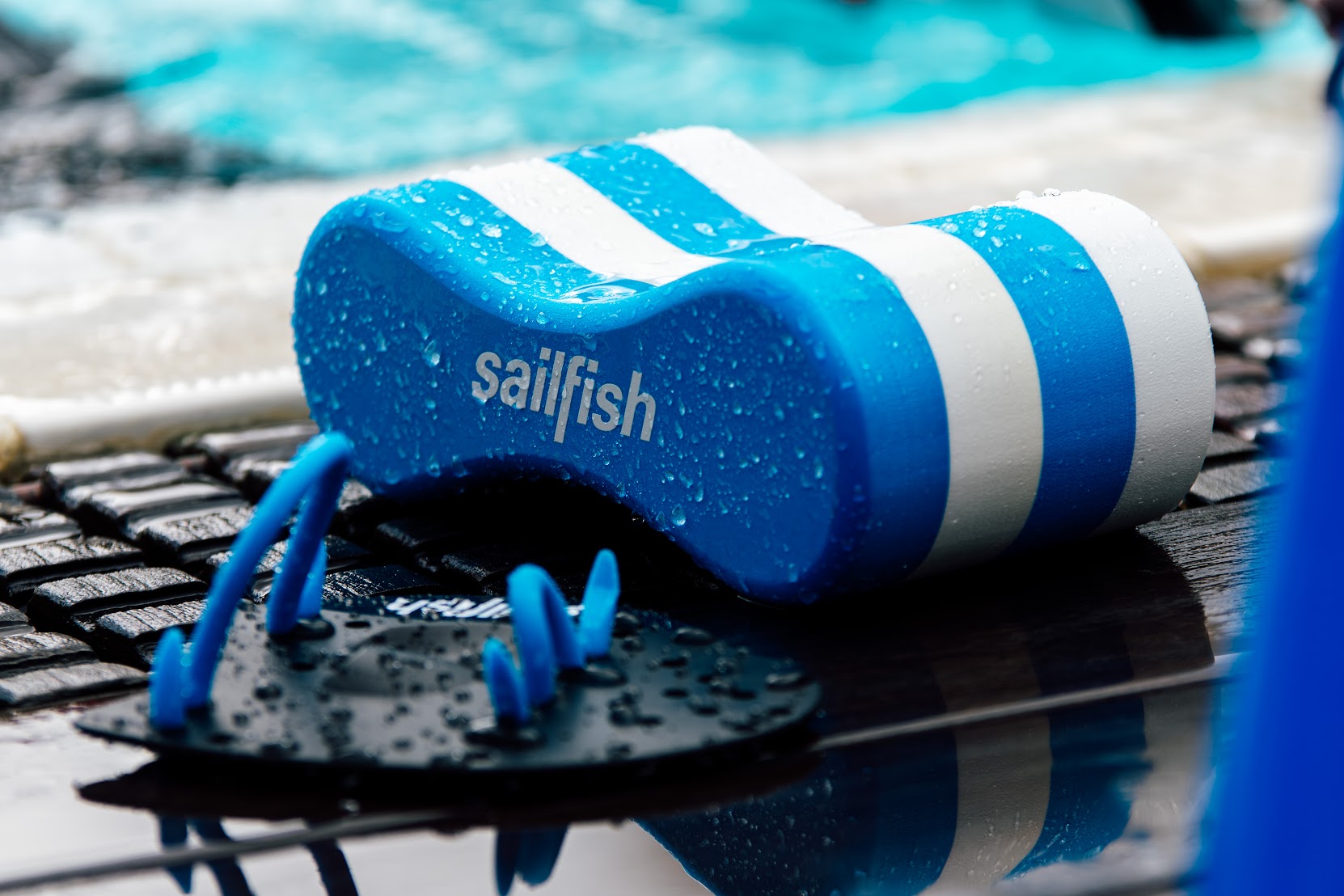
You can find additional training tools such as pull buoys, paddles and swim snorkels in the sailfish training equipment collection.
Frequently Asked Questions About Swimming With Fins
Can swim fins improve my flutter kick in the long term?
Yes, they can help you develop a better feel for the correct movement and improve your body position. The key is transferring that technique to swimming without fins.
Are short or long fins better for triathletes?
Short training fins are generally more suitable because they allow a relatively natural kicking rhythm.
How often should I train with swim fins?
Include fins regularly in short technique sets. You do not need to use them for every length. Combining fin drills with normal freestyle swimming is more important.
Why am I not much faster with fins?
Your kick may be too large, driven mainly by your knees or affected by an unstable body position. Focus on small, controlled movements originating from your hips.
Can swim fins improve ankle flexibility?
Fins support ankle extension and help you feel a more effective foot position. For long-term mobility improvements, additional mobility exercises are useful.
Now It Is Your Turn: Do You Train With Swim Fins?
Are swim fins a regular part of your training, or do you prefer swimming without them? Maybe you have a favorite exercise that has helped you improve your kick.
Share your experience in the comments! What results have you noticed from training with swim fins?
enjoy your swim.


Leave a comment