


Which swim goggles are right for you?
Finding the right swim goggles sounds simple at first. Put them on, adjust them, start swimming. But in practice, you quickly notice that not every pair of swim goggles fits every face, every training session and every goal. Whether you train in the pool, swim in open water or stand on the start line on race day makes a real difference.
That is why it is worth looking beyond the design when buying swim goggles. What really matters is how the goggles fit, what they are made for and whether they give you exactly what you need in the water: clear vision, secure hold and a comfortable feeling.
Why the right fit matters
Swim goggles need to seal properly without feeling uncomfortable. That sounds simple, but it is one of the most important points. Eye sockets, nose shape, head shape and personal comfort are different for every swimmer. A pair of goggles that fits one person perfectly can press, slip or let water in for someone else.
That is why swim goggles should not simply be tightened as much as possible. If they only stay in place because the strap is pulled extremely tight, the fit is usually not right. A good fit comes from the shape of the seal, the right nose bridge and a clean adjustment of the strap.
Good swim goggles sit evenly on the face, seal properly and stay stable while you move. They should be tight enough to keep water out, but not so tight that they leave pressure marks or distract you while swimming.
Pool training, open water or race day?
Before buying swim goggles, think about where you will mainly use them. For indoor pool training, compact goggles with a clear field of vision are often a good choice. Here, comfort, reliable fit and good visibility in the lane are the key factors.
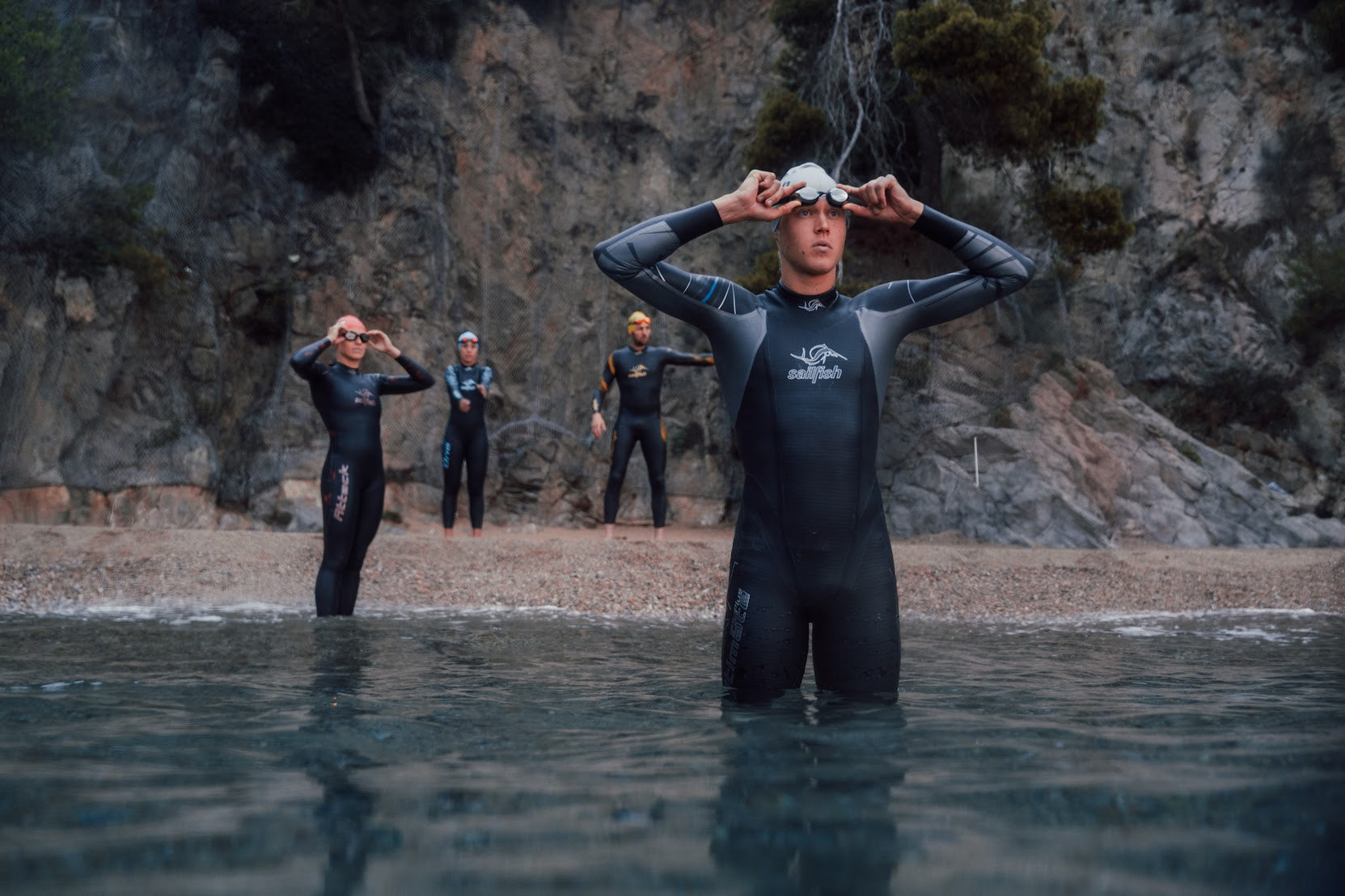
In open water, the requirements change. UV protection, lens tint, orientation and a wider field of vision become much more important. Outside, you want to see buoys, other swimmers, waves and changing light conditions clearly. Open water swim goggles can therefore be slightly larger and offer more overview.
For racing, another factor comes into play: the goggles need to stay in place during the start, turns, waves or contact with other swimmers. Race day goggles are therefore often more compact, more dynamic and built for a secure hold.

Which lenses are right for you?
The lenses also make a big difference. Clear lenses are especially useful for indoor training or darker light conditions. Tinted lenses help in bright surroundings and can feel more comfortable outdoors. Mirrored lenses reduce glare and are especially popular in sunny conditions, open water and race situations.
If you mainly swim indoors, you usually do not need heavily tinted lenses. If you train outside regularly or take part in open water races, UV protection, tint and a wide field of vision become much more important.
The right swim goggles for your use case
At sailfish, there is not one single pair of swim goggles for everyone. Instead, different models are made for different needs. Some goggles are built for racing, others for everyday training, indoor swimming or open water.
Compact models such as Rush or Rush Pro are especially interesting if you are looking for swim goggles for race day and performance. For regular pool training, models such as Flow, Streamer, Lightning or Sweden can be the right choice depending on your needs and personal fit.
If you want as much overview as possible in open water, a larger pair of swim goggles such as the Outer Space Mask can be a good option. It offers a particularly wide field of vision and helps you orient yourself better in open water.
How tight should swim goggles be?
Swim goggles should feel secure, but not uncomfortably tight. Many swimmers tighten the strap too much when water gets in. But often, this does not solve the problem in the long term. It only creates more pressure around the eyes and nose.
It is better to check the fit first. Does the seal sit cleanly on the skin? Does the nose bridge fit? Do the goggles sit evenly on the face? Only then should the strap be adjusted so the goggles stay stable without creating too much pressure.
A useful sign: if you gently press the goggles onto your face and they hold for a moment without the strap pulling hard, the shape usually fits your face well.

Compare swim goggles easily
Because the choice is not always easy, we have sorted our swim goggles by use case on a dedicated landing page. There, you can quickly see which goggles are designed for race day, outdoor training, indoor training, everyday sessions or experienced swimmers.
Our swim goggles comparison also helps you understand the differences between the individual models at a glance. This makes it easier to find out which pair of goggles fits your swimming style, your use case and your personal expectations.
Find the right swim goggles for your training.
What to look for when buying swim goggles
The best swim goggles are not automatically the most expensive or the most eye catching. They are the goggles that fit your face, your training and your goals. When buying swim goggles, pay particular attention to fit, use case, field of vision, lens color, UV protection and adjustability.
If you swim outdoors a lot, you need different features than for pool training only. If you race, a secure hold is especially important. If you are just getting started, comfort can be the decisive factor.
In the end, it is not about wearing just any pair of swim goggles. It is about finding goggles that fit, protect, give you orientation and do not distract you in the water.
Still not sure which model is right for you? Take a look at our swim goggles overview and find the pair that fits your next training session, open water adventure or race day.
Enjoy your swim.


Leave a comment