


For many triathletes, this isn't a matter of preference – it's a question of rules, physics, and swimming ability. Making the right call can save you seconds, sometimes minutes. Getting it wrong means swimming below your potential – or risking a disqualification.
In this article, we break down what a wetsuit and a swimskin each bring to the table, which water temperatures take the decision out of your hands, and when a performance swimskin like the sailfish Rebel Pro 3 makes all the difference.
What does a wetsuit do for you?
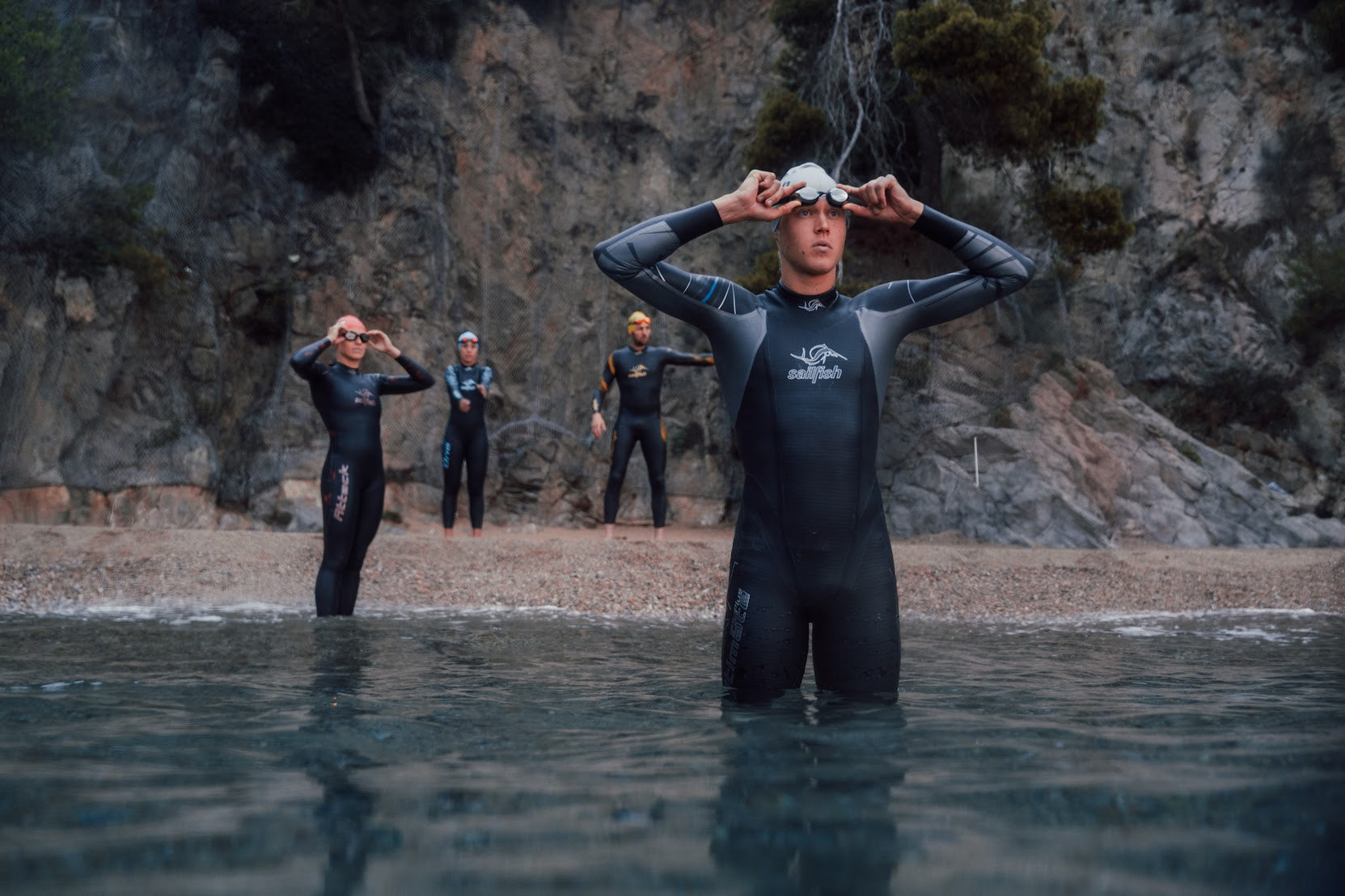
The wetsuit is the dominant race equipment in triathlon – and for good reason. It combines two physical advantages no other piece of gear can offer simultaneously: buoyancy and thermal protection.
Buoyancy – the underrated time factor
Neoprene is less dense than water. That means a well-fitting wetsuit lifts you toward the surface. Your body sits higher and flatter, your drag decreases – and you swim faster without spending more energy. For athletes with weak leg kick or an inefficient body position, this is a measurable advantage: several seconds per 100 metres is realistic.
Warmth – comfort and safety
In cold water below 20 °C, an unprotected body cools down fast. Muscles work inefficiently, heart rate spikes, panic creeps in. A wetsuit insulates – it keeps your core temperature stable and protects you across the full swim distance. Especially in longer races (middle distance, IRONMAN), that's not a comfort factor – it's a safety issue.
Wetsuit as a confidence booster in open water
Anyone who swims regularly in a wetsuit knows the feeling: the suit provides support, security, and the sense of being in control of the water – even when it's rough or murky. For many age groupers, the wetsuit is simply the familiar, reliable choice that grows with them through the season.
What does a swimskin do for you?
A swimskin – also called a speedsuit or triathlon swim suit – is not a wetsuit substitute. It's a standalone high-performance product for specific conditions: warm water, strong swimmers, performance-focused athletes.
Hydrodynamics instead of buoyancy
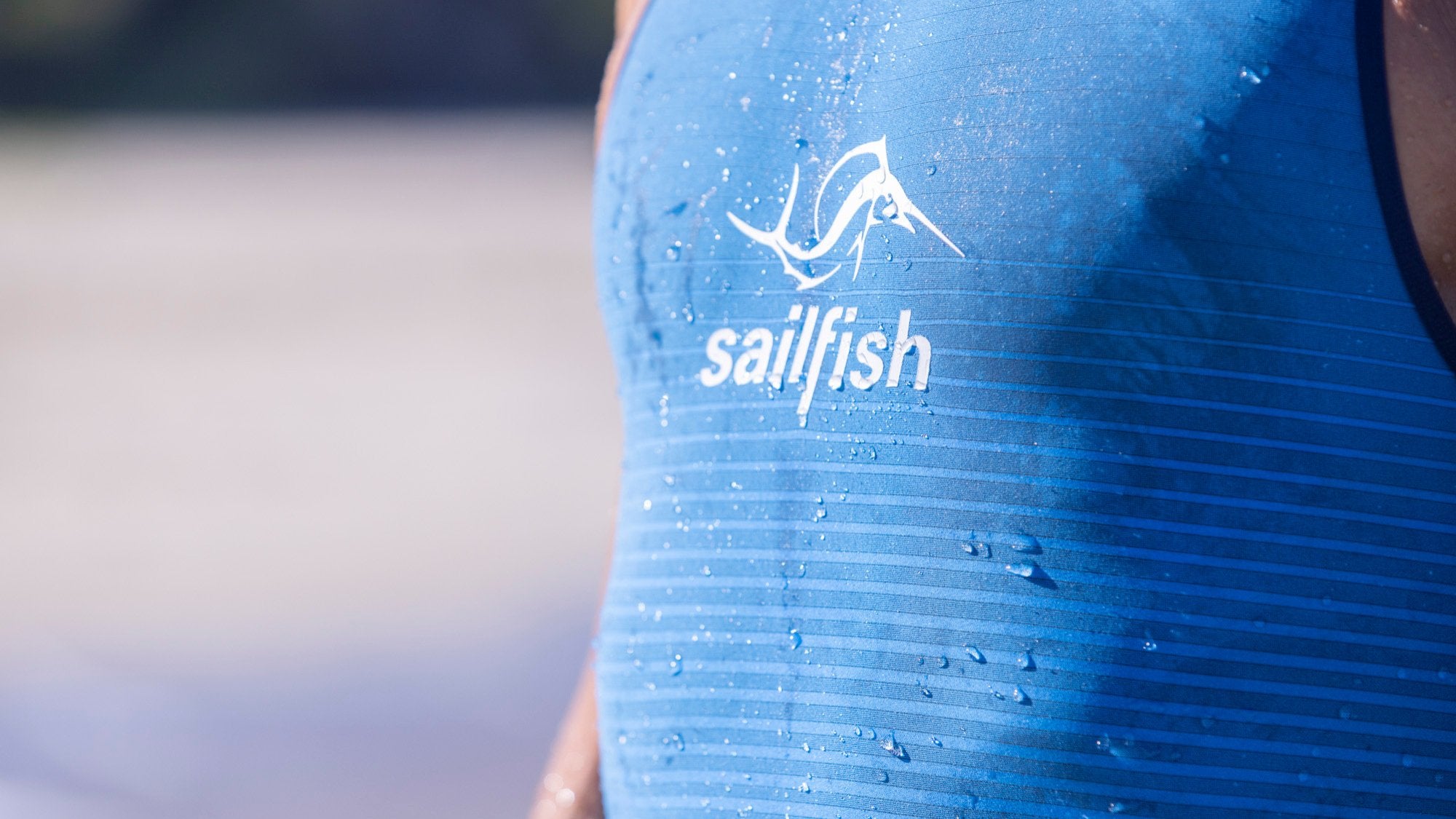
Where the wetsuit lifts, the swimskin optimises drag. Highly compressed, water-repellent materials wrap around the body like a second skin – every seam bonded rather than sewn, every curve of the cut reducing turbulence. For strong swimmers whose technique already produces a natural, flat body position, the hydrodynamic principle of the swimskin is more effective than additional buoyancy.
Freedom and speed in transition
No pulling, no peeling, no lubricant. A swimskin comes off in seconds – and that's pure gold in T1. Athletes who race regularly and count every second know exactly how much this matters.
Mental edge: compression and body awareness
Swimskins with targeted compression zones improve blood circulation and proprioceptive body awareness in the water. Many athletes report swimming cleaner and more controlled – both a psychological and physical advantage.
The temperature rules: what can you wear and when?
Water temperature is not a preference – it's the governing framework. The major organisations (World Triathlon, IRONMAN, IRONMAN 70.3, Challenge) have clear rules you need to know. A violation can result in disqualification.
World Triathlon (WTS / Olympics / Duathlon)
- Below 20 °C: Wetsuit permitted and recommended
- 20 °C to 22 °C: Wetsuit optional (athlete's choice)
- Above 22 °C: Wetsuit banned – swimskin or trisuit only
IRONMAN & IRONMAN 70.3
- Below 16 °C: Wetsuit mandatory
- 16 °C to 24.5 °C: Wetsuit permitted
- 24.6 °C to 26.0 °C: Wetsuit banned – swimskin permitted
- Above 26.1 °C: Swimskin also banned – trisuit or swimwear only
Challenge Family
- Up to 24.0 °C: Wetsuit permitted
- 24.1 °C to 29.0 °C: Wetsuit banned – swimskin permitted
- Above 29.1 °C: No swimskin – trisuit only
Important: Water temperature is measured officially on race day shortly before the start. Always check the current race briefing from your event organiser – rules can change.
Wetsuit vs. swimskin: the direct comparison
| Wetsuit | Swimskin | |
|---|---|---|
| Water temperature | Cold water (< 22–24 °C) | Warm water (22–26 °C depending on organisation) |
| Main advantage | Buoyancy + thermal protection | Hydrodynamics + T1 speed |
| Ideal for | All performance levels | Technically strong, confident swimmers |
| Transition | More time-consuming | Off in seconds |
| Care | Lukewarm rinse, dry in shade | Easy, machine-safe |
| Distance | All distances | All distances where wetsuits are banned |
The sailfish Rebel Pro 3 – Kona legacy for every athlete
When the wetsuit isn't allowed, you want the best the market has to offer. The sailfish Rebel Pro 3 is exactly that: a swimskin with a racing history.
It was the suit sailfish founder and CEO Jan Sibbersen wore when he swam the fastest split at IRONMAN Hawaii in Kona – the same year Patrick Lange became the first person to finish under eight hours. The Rebel Pro 3 is the consistent evolution of that performance, reimagined for today's athletes with zero compromise on speed.
What makes the Rebel Pro 3 stand out
- Second-skin fit with maximum compression – the "Swimmer's Fit" reduces water resistance from the first stroke
- Water-repellent high-performance fabric – minimal water absorption across all distances
- Full shoulder freedom – no pulling, no restriction through the stroke cycle
- Seamless construction – no friction points, no chafing
- Super-soft grip tape – prevents skin irritation even in long-distance races
- Inverse zipper – fast, effortless removal in T1
Whether it's a middle-distance race in the Spanish heat or IRONMAN Hawaii – the Rebel Pro 3 is the swimskin when there's no room for second best.

Conclusion
The choice between wetsuit and swimskin is not a matter of taste – it's a matter of water temperature, regulations, and your swimming ability. Know the rules, plan your equipment from the moment you register for a race, and be prepared for both scenarios.
For cold water: rely on the right wetsuit and make the most of every advantage buoyancy gives you. For warm water or a wetsuit ban: invest in a swimskin that fits like a second skin – and makes you faster without holding you back.
Made to make you faster.


Leave a comment