


How to Make the Perfect Transition to Outdoor Pool Swimming
The first outdoor pool sessions of the season always feel a little different. After months of swimming indoors, you suddenly have to deal with fresh air, cooler water, changing light conditions and a new kind of rhythm in the lane.
That is exactly what makes the outdoor pool the perfect stepping stone between indoor swimming and open water. It gives you a safe environment while helping you prepare for many of the challenges you will later face in lakes, rivers or the sea.
Why the outdoor pool is the ideal start to the open water season
In the indoor pool, everything is predictable: the water temperature, the lane markings, the lighting and the walls at each end. Outdoors, swimming becomes more dynamic. Sunlight, wind, cooler water and more movement in the pool all change the way swimming feels.
Used in the right way, the outdoor pool can help you build confidence, improve orientation and prepare your body and mind for your first open water sessions.
What should you pay attention to when starting in the outdoor pool?
1. Start calmly
Even if motivation is high, your first outdoor pool session should not be too intense. Cooler water and changing conditions can feel more demanding than expected. Start with relaxed swimming, short sets and controlled breathing.
2. Get used to the water temperature
Early in the season, outdoor pool water can still be quite cool. Take a few minutes to settle in before swimming harder efforts. Focus on long exhalations into the water and a steady stroke rhythm.
3. Train your orientation
Light reflections, sun and shadows can make it harder to see clearly. Use this as training: look forward briefly every few strokes, choose fixed points around the pool and practise staying relaxed even when visibility changes.
4. Practise bilateral breathing
In open water, wind, waves or sunlight may make one breathing side more comfortable than the other. The outdoor pool is a great place to practise breathing on both sides without pressure.
5. Do not forget sun protection and hydration
Outdoor swimming often means spending more time in the sun than planned. Sunscreen, a water bottle at the poolside and warm clothing for after your session should be part of your routine.
Which sailfish products are useful for outdoor pool swimming?
You do not need a lot of equipment for the transition to outdoor swimming. What matters most is comfort, warmth and confidence in changing conditions.
Thermal Swimsuit: ideal for cooler outdoor pool sessions
The sailfish Thermal Swimsuit is a smart choice for the first weeks of outdoor pool training. Its streamlined fit and warming fleece technology make it suitable for cooler sessions without feeling like a full wetsuit.
For men, the Men’s Thermal Swimsuit offers the same idea: extra warmth and comfort for outdoor swimming when the water is still fresh.
Ignite 3: the next step towards open water
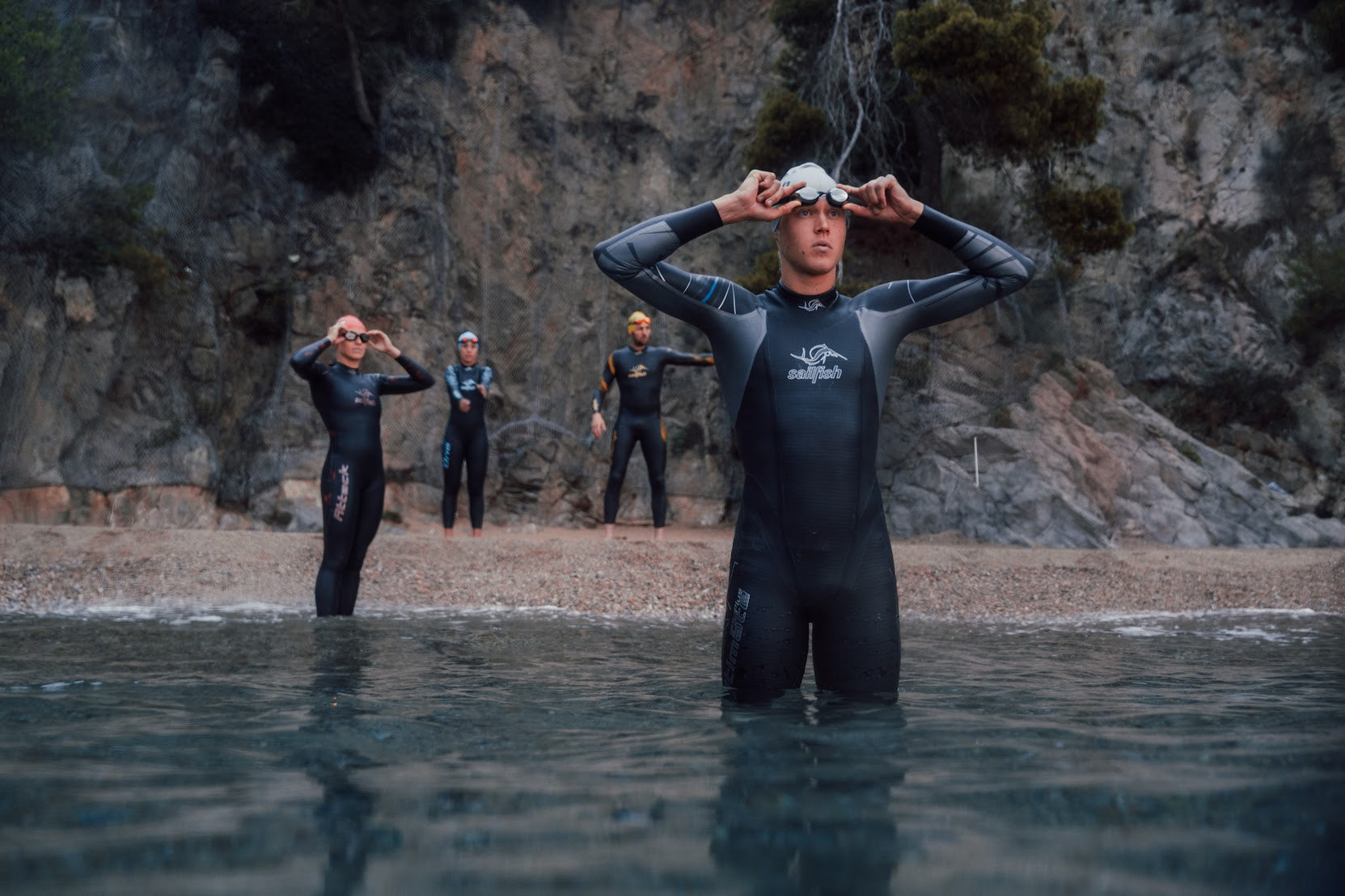
If your outdoor pool training is part of your preparation for open water or your first triathlon, the sailfish Ignite 3 is worth considering. It is designed to support swimmers as they move from pool training to open water, offering buoyancy, flexibility and a comfortable fit.
The Ignite 3 Women provides the same benefits in a women-specific fit. Especially for beginners, the added buoyancy of a wetsuit can help create a more stable body position and a calmer swimming experience.
Open Water Safety Buoy: prepare before you leave the pool
You will not normally need a swim buoy in the outdoor pool. But once you move into lakes or the sea, the sailfish Open Water Safety Buoy becomes an important safety companion. It increases visibility and offers additional support if you need a short break.
What can you learn from the outdoor pool for open water swimming?
Sighting without losing rhythm
In open water, there is no black line on the bottom. Practise lifting your head slightly every six to ten strokes, spotting a fixed point and returning directly to your normal stroke rhythm.
Staying calm in changing conditions
A busy outdoor pool, small waves from other swimmers or changing light conditions are not distractions. They are useful training. Learn to stay calm, keep breathing and continue swimming smoothly.
Swimming at a steady pace
Open water rewards control. Instead of swimming every length too hard, practise a consistent pace. Sets like 4 x 200 metres or 3 x 400 metres help you build rhythm and confidence.
Breathing on both sides
Bilateral breathing gives you more options in open water. If waves or sunlight come from one side, you can simply switch to the other and continue swimming comfortably.
A simple outdoor pool session for the start of the season
- 300 m easy warm-up
- 4 x 50 m technique focus with calm breathing
- 4 x 100 m steady pace, sighting briefly every 6–10 strokes
- 4 x 50 m bilateral breathing
- 200 m easy cool-down
This session is short enough for an easy start, but focused enough to prepare you for key open water skills: breathing, orientation, rhythm and confidence.
Conclusion: your outdoor pool is the first step towards open water
The perfect transition to outdoor pool swimming is all about awareness. Pay attention to temperature, breathing, orientation and the right equipment for the conditions.
The Thermal Swimsuit helps you stay comfortable in cooler outdoor sessions, the Ignite 3 prepares you for your first open water experiences, and the Open Water Safety Buoy becomes essential once you leave the pool behind.
With the right mindset, your first outdoor pool sessions can become much more than seasonal training. They can be the start of a safe, confident and enjoyable open water season.
FAQ: Transitioning to outdoor pool swimming
When should I start swimming in the outdoor pool?
As soon as the outdoor pool opens and you feel comfortable with the water temperature. Start with shorter, relaxed sessions and increase volume gradually.
Is the Thermal Swimsuit an alternative to a wetsuit?
For cooler outdoor pool sessions, the Thermal Swimsuit is a very practical option. For longer open water swims or triathlon preparation, a wetsuit such as the Ignite 3 offers more buoyancy, warmth and support.
What is the biggest difference between outdoor pool and open water swimming?
The outdoor pool still gives you structure and safety. Open water adds navigation, visibility, changing conditions and the need to stay calm without walls or lane markings.
Can I practise open water skills in the outdoor pool?
Yes. Sighting, bilateral breathing, steady pacing and staying relaxed in busier conditions can all be trained effectively in the outdoor pool.


Leave a comment