


As the open water season comes to an end, many triathletes are heading back to the pool. It is a good opportunity to work on swimming technique and build a solid foundation for the next season. But what does an effective swim workout actually look like? Simply swimming 2,000 metres without stopping is one option, but it is not always the best way to improve. These three swim training plans for 1,500, 2,000 and 2,500 metres will help you work on your technique, endurance and speed. All three workouts can be completed in a 25-metre or 50-metre pool.
Why structured swim training makes a difference
If you swim regularly, you probably know the routine. You jump into the pool, swim your usual distance and get out again. You have covered a few kilometres, but there was no real goal behind the session.
The pool is actually one of the best places for structured training. The distance is always the same, conditions are consistent and you can easily track your progress over time.
A good swim workout usually consists of three parts: a warm-up, a main set with a specific training focus and an easy cool-down. Depending on your goal, you can also include technique drills, intervals or changes of pace.
The following sessions are designed for triathletes and recreational swimmers who can already swim freestyle confidently. The suggested rest periods can be adjusted to match your fitness level.

Swim workout 1: 1,500 metres for technique and feel for the water
Training goal: Improve swimming technique, develop a better feel for the water and find a consistent rhythm after a break from training.
Who is it for? Swimmers who can already swim freestyle and want to improve their technique. This session is also a good option when returning to the pool after some time off.
Warm-up – 300 metres
Start with 300 metres of easy swimming. Focus on relaxed breathing and moving smoothly through the water.
Speed is not important at this stage. Use the first few lengths to pay attention to your body position and how your arms move through the water.
Technique drills – 4 × 50 metres
Swim four sets of 50 metres with 15 to 20 seconds of rest between each repetition. Each set focuses on a different aspect of your technique:
- 50 m catch-up drill: Keep one arm extended in front until the other hand completes its recovery and reaches the front. Focus on controlled movements.
- 50 m freestyle with body extension: Reach forward with every stroke while maintaining a stable body position.
- 50 m single-arm freestyle: Focus on one arm at a time, switching sides during the drill. Pay particular attention to body rotation and balance in the water.
- 50 m normal freestyle: Put the previous technique drills into practice and notice how your stroke feels.
The most important thing is to perform each drill correctly. If your technique starts to suffer, slow down.
Main set – 6 × 150 metres
Swim six sets of 150 metres with 20 to 30 seconds of rest between repetitions.
- 2 × 150 m easy: Find a consistent rhythm and focus on your breathing.
- 2 × 150 m controlled: Pay attention to your arm movement, body rotation and a stable position in the water.
- 2 × 150 m slightly faster: Increase your speed a little without sacrificing technique.
Try to stay focused during the final two repetitions. Swimming faster should not simply mean moving your arms more frantically.
Cool-down – 100 metres
Finish the session with 100 metres of easy swimming.
Total distance: 1,500 metres
1,500m swim workout overview
| Section | Workout | Distance |
|---|---|---|
| Warm-up | Easy swimming | 300 m |
| Technique | 4 × 50 m | 200 m |
| Main set | 6 × 150 m | 900 m |
| Cool-down | Easy swimming | 100 m |
| Total | 1,500 m |
Swim workout 2: 2,000 metres to improve endurance
Training goal: Develop a consistent swimming pace and become more comfortable maintaining it over longer distances.
Who is it for? Swimmers and triathletes who already train regularly and want to improve their aerobic endurance.
For triathletes in particular, maintaining a steady pace over longer distances is an important skill. If you start the first 200 metres too fast, you may notice your energy dropping much earlier than expected.
Warm-up – 400 metres
Swim 400 metres at an easy pace. Start slowly and gradually increase your speed during the final 100 metres.
Try to establish a comfortable and consistent breathing rhythm right from the beginning.
Technique drills – 4 × 50 metres
Swim four sets of 50 metres with 15 seconds of rest between repetitions.
- 50 m catch-up drill: Focus on a controlled arm stroke and extending your body forward.
- 50 m normal freestyle: Apply the technique you just practised.
- 50 m freestyle focusing on rotation: Pay attention to upper-body rotation and keeping your head stable.
- 50 m normal freestyle: Swim as smoothly and evenly as possible.
Main set – 5 × 200 metres
Swim five sets of 200 metres with 20 to 30 seconds of rest between repetitions.
Try to complete all five repetitions at approximately the same pace. For example, if you swim the first 200 metres in four minutes, aim to stay close to that time for the remaining sets.
It is better to start slightly slower. Ideally, the first repetition should feel controlled, allowing you to maintain your pace all the way through the final set.
This type of training helps you develop a better understanding of your swimming speed. It is particularly useful for longer triathlon distances, where swimming too hard early on can cost valuable energy.
Pace changes – 4 × 50 metres
Swim four sets of 50 metres with 20 seconds of rest between repetitions.
Swim the first 25 metres of each repetition at a faster pace and the second 25 metres easy.
This adds a short speed stimulus towards the end of your workout without turning the entire session into high-intensity training.
Cool-down – 200 metres
Finish with 200 metres of relaxed swimming.
Total distance: 2,000 metres
2,000m swim workout overview
| Section | Workout | Distance |
|---|---|---|
| Warm-up | Easy swimming | 400 m |
| Technique | 4 × 50 m | 200 m |
| Main set | 5 × 200 m | 1,000 m |
| Pace changes | 4 × 50 m | 200 m |
| Cool-down | Easy swimming | 200 m |
| Total | 2,000 m |
Swim workout 3: 2,500 metres for speed and endurance
Training goal: Improve your swimming speed while maintaining good technique at higher intensities.
Who is it for? More experienced swimmers and triathletes who already train regularly and can comfortably swim longer distances.
This workout combines technique drills, longer intervals and controlled changes of pace. The main set challenges you to maintain a consistent swimming style even as fatigue starts to build.
Warm-up – 400 metres
Begin with 400 metres of easy freestyle swimming. Use the first few lengths to settle into a relaxed rhythm and prepare your muscles for the session.
Technique drills – 6 × 50 metres
Swim six sets of 50 metres with 15 to 20 seconds of rest between repetitions.
Alternate between three technique drills and normal freestyle swimming:
- 50 m catch-up drill
- 50 m normal freestyle
- 50 m freestyle focusing on body rotation
- 50 m normal freestyle
- 50 m single-arm freestyle
- 50 m normal freestyle
During the normal freestyle repetitions, try to apply the movements you practised in the technique drills.
Main set – 3 × 400 metres
The main set consists of three blocks of four 100-metre repetitions. Rest for 15 to 25 seconds between individual 100-metre efforts and approximately 30 seconds between blocks.
Block 1: 4 × 100 m – Controlled pace
Swim the first four repetitions at a consistent pace that you could also maintain over longer distances. Focus on an efficient stroke and steady breathing.
Block 2: 4 × 100 m – Increase your pace
During the next four repetitions, increase your speed slightly. The effort should now feel noticeably harder, but you should still be able to swim with good control.
Block 3: 4 × 100 m – Maintain your pace
Try to maintain the speed from the second block. Pay particular attention to your body position and arm stroke as fatigue increases.
If your technique starts to deteriorate significantly, reduce your pace. The goal is not simply to survive the final repetitions, but to keep swimming efficiently under greater physical stress.
Technique under light fatigue – 4 × 100 metres
Swim another four sets of 100 metres at a relaxed, controlled pace with approximately 20 seconds of rest between repetitions.
If you already have experience using swim paddles, you can use small paddles for two repetitions and complete the other two without training aids.
Focus on a clean catch and controlled arm movement. Avoid using paddles if you experience shoulder discomfort.
Cool-down – 200 metres
Finish with 200 metres of easy swimming to gradually reduce the intensity.
Total distance: 2,500 metres
2,500m swim workout overview
| Section | Workout | Distance |
|---|---|---|
| Warm-up | Easy swimming | 400 m |
| Technique | 6 × 50 m | 300 m |
| Main set | 3 × (4 × 100 m) | 1,200 m |
| Technique | 4 × 100 m | 400 m |
| Cool-down | Easy swimming | 200 m |
| Total | 2,500 m |
Which swim training plan is right for you?
Not every swim session needs to be particularly long or demanding. What matters most is what you want to achieve with your training.
- 1,500 metres: A good option for returning to swimming, focusing on technique or completing a shorter session.
- 2,000 metres: Suitable if you already swim regularly and want to improve your aerobic endurance.
- 2,500 metres: Designed for more experienced swimmers who also want to work on speed and maintaining technique under fatigue.
Try to vary your training focus throughout the week. Especially during the off-season, combining technique, endurance and speed sessions is usually more useful than repeating exactly the same workout every time you visit the pool.
What equipment do you need for pool swim training?
For all three training plans, a comfortable pair of swimming goggles and regular swimwear are enough. Additional training aids are not essential.
During longer workouts, your goggles should fit comfortably and stay in place even when turning frequently at the end of the pool. The sailfish Flow features a soft silicone frame and interchangeable nose bridges for an individual fit. The goggles are suitable for both pool training and open water swimming.
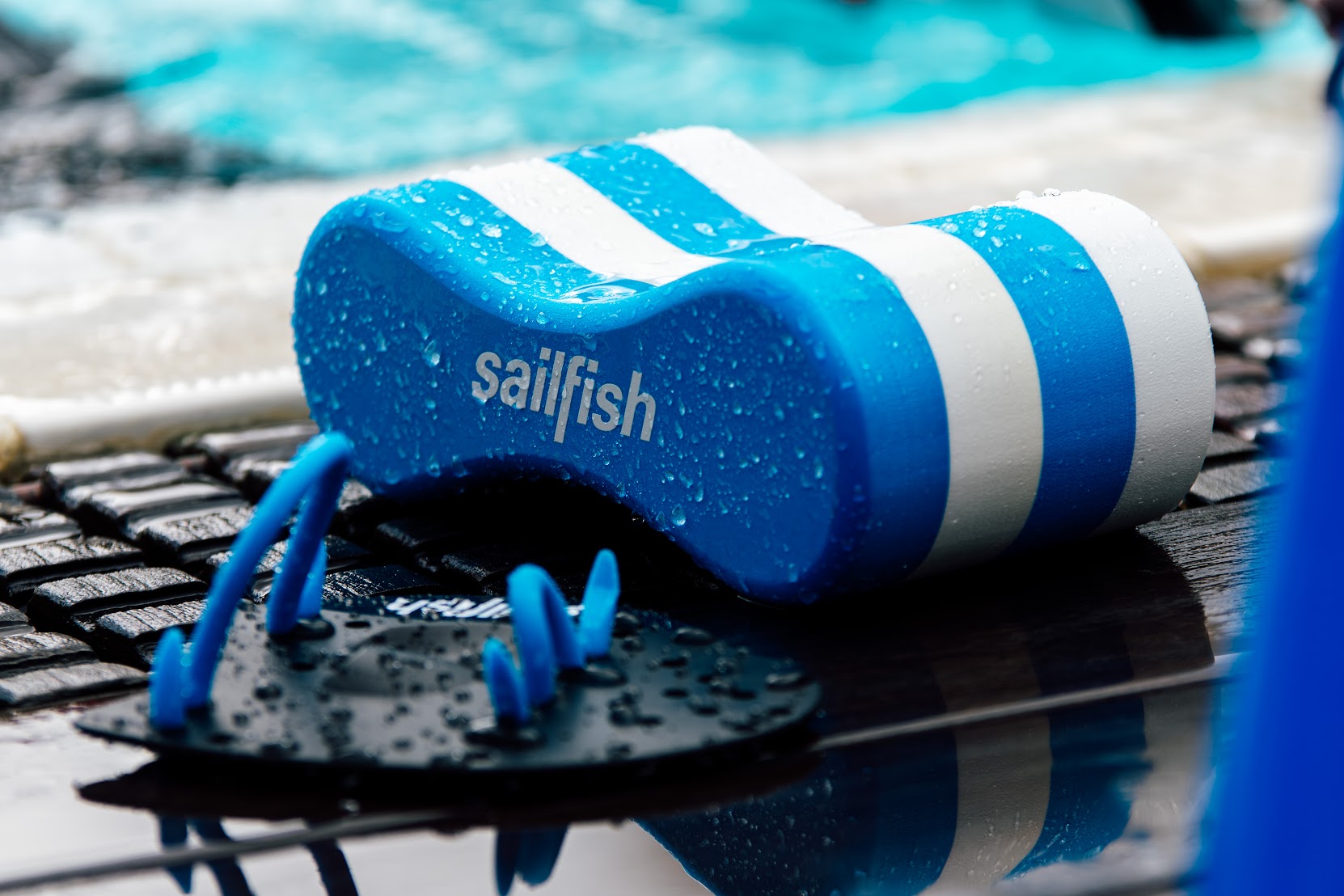
If you want to work specifically on your arm stroke, training aids can also be useful. The sailfish Paddles are available in three sizes and increase the surface area of your hands in the water.
However, using paddles during every session is not necessarily a good idea. Particularly if your stroke technique needs improvement or the resistance is too high, they can place unnecessary strain on your shoulders.
For more information on how to use these training aids effectively, take a look at the sailfish guide Using a Pull Buoy and Paddles Correctly.
Frequently asked questions about pool swim training
How far should you swim during a workout?
That depends on your training goal and experience. For many recreational swimmers and triathletes, sessions between 1,500 and 2,500 metres can be a useful training distance. Shorter workouts can also be effective if they have a clear structure.
How often should a triathlete swim?
Two to three swimming sessions per week allow many triathletes to work consistently on their technique and endurance. The right frequency also depends on cycling, running and recovery.
How long does a 1,500m swim workout take?
At an average swimming pace of 2:00 minutes per 100 metres, swimming 1,500 metres takes 30 minutes without breaks. Technique drills and rest periods will increase the total workout duration.
How long does a 2,000m swim workout take?
At a pace of 2:00 minutes per 100 metres, the swimming portion takes 40 minutes. Rest periods between intervals need to be added to calculate the full session duration.
Is swimming 2,500 metres a good workout?
For experienced swimmers and triathletes, 2,500 metres can be a useful training distance. However, what matters is not just the distance but also the intensity, technique drills and structure of the session.
Is it better to swim 2,000 metres continuously or in intervals?
Both approaches can be useful. Interval training allows you to work on specific speeds or technical aspects of your stroke. Longer continuous swims help you assess endurance and your ability to maintain a steady pace over time.
Do I need paddles or a pull buoy for effective swim training?
No. You can train effectively without any additional equipment. Paddles and pull buoys can support specific exercises, but they should be used with a clear purpose rather than replacing good swimming technique.
Can I complete these workouts in a 50-metre pool?
Yes. All three workouts can be completed in either a 25-metre or a 50-metre pool. The distances and suggested rest periods remain the same.
What does your winter swim training look like?
Do you prefer short, intense workouts or longer, steady swimming sessions?
How many metres do you usually swim per session, and how often are you currently getting to the pool?
Share your training routine in the comments. You might even find some new ideas for your next swim session!


Leave a comment