


Race season is in full swing. Frankfurt, Roth, Hamburg – the biggest events of the year are just weeks away. Months of preparation, thousands of kilometres in the water, on the bike and on the run. And now, in the final week before the start, many athletes make the most critical mistake of their entire preparation.
They train too much, eat wrong, sleep too little – or they spiral into a nervousness that undoes months of hard work. But race week isn't an afterthought. It's an active part of your training. Athletes who get it right can unlock up to 4% more performance on race day compared to those without a structured taper – that's backed by science. On a long-distance race, that can easily translate to 15 to 20 minutes.
Here's what you should actually be doing in the final week – evidence-based, practical, no myths.
Training: less is more – and that's science
Tapering – the deliberate reduction of training load before a race – isn't an invention of lazy triathletes. It's scientifically validated: studies show that a well-executed taper can improve race-day performance by 2 to 4%, by allowing the body to reduce accumulated fatigue, top up glycogen stores and increase red blood cell production.
For long-distance racing, tapering ideally begins two to three weeks before the event. In the final week, the target is to reduce training volume to around 40 to 60% of normal load – while keeping intensity intact. Short, sharp sessions rather than long endurance blocks. This keeps the muscles and neuromuscular system primed without building new fatigue.
What to train in the final week
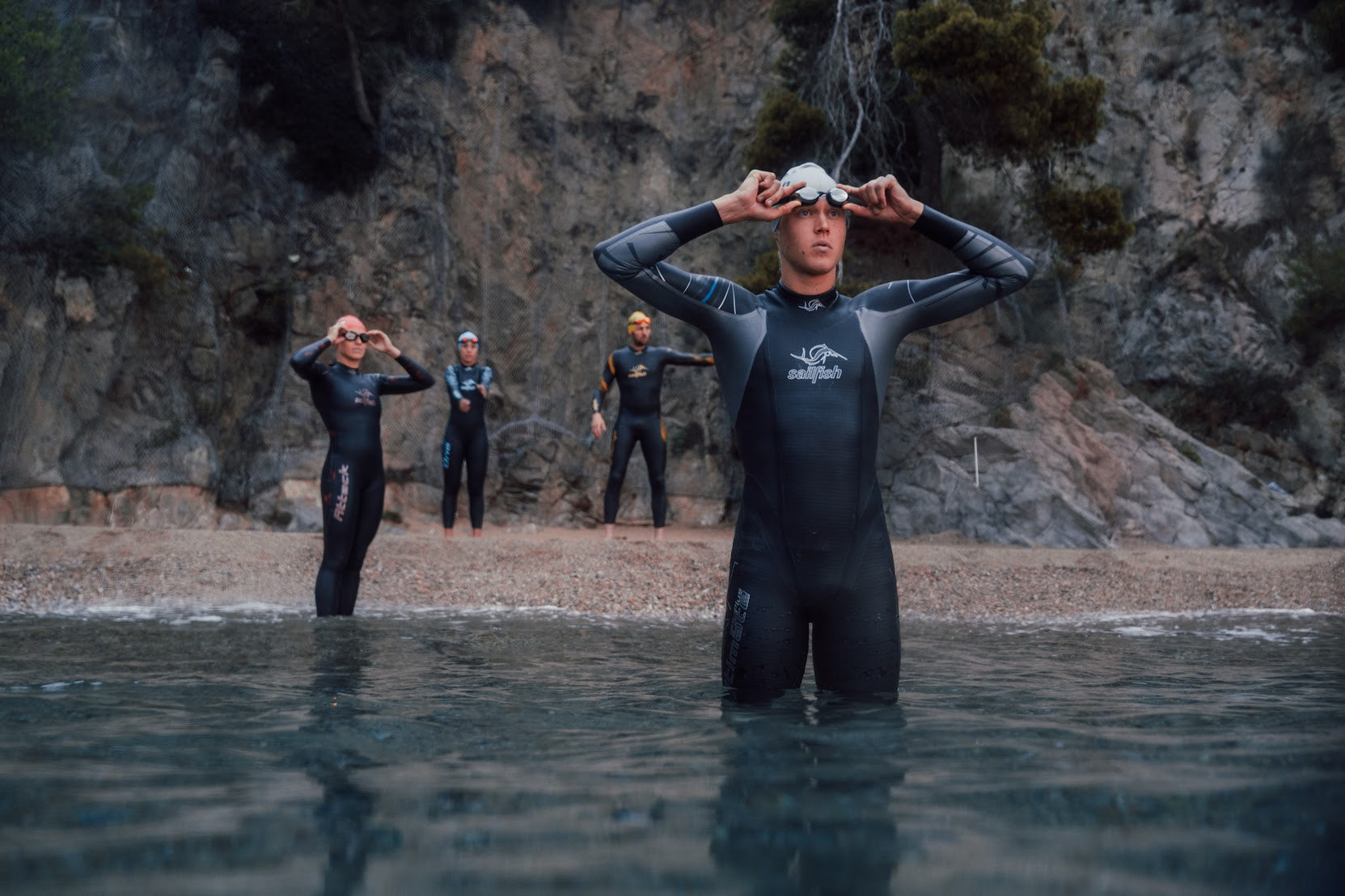
- Swimming: Short sessions with some pace – 2,000 to 2,500 m is plenty. If possible, one session in open water or in your race suit. No more long endurance swims.
- Bike: 60 to 90 minutes easy, with two or three short efforts at race pace. No long rides. If you prefer a controlled indoor session during race week, ROUVY offers structured indoor workouts tailored to triathletes.
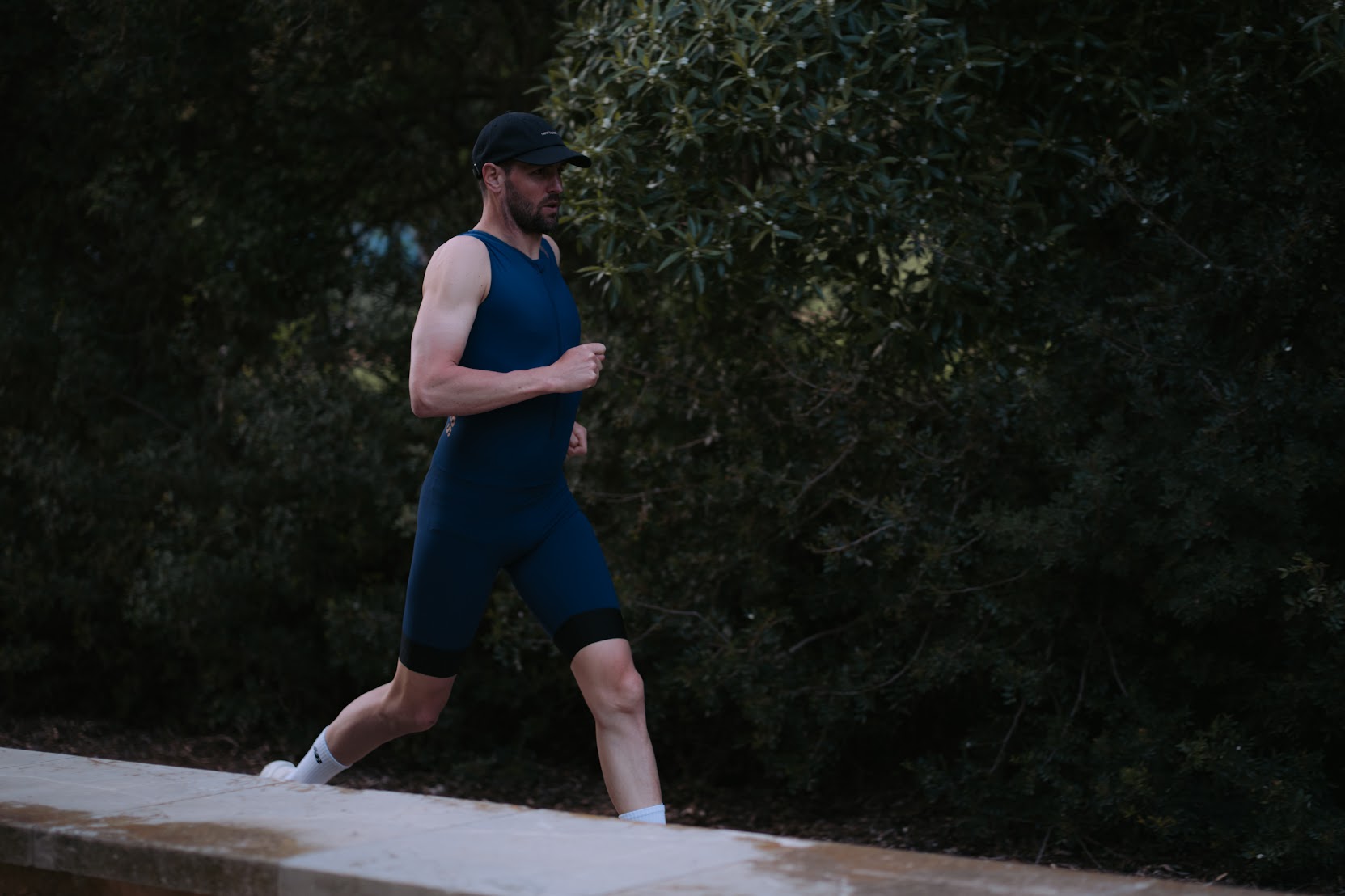
- Run: 30 to 40 minutes easy, with a few short strides at most. Your last longer run should have happened at least 10 days before race day.
The golden rule of race week: nothing new. No new wetsuit, no new nutrition strategy, no new shoes, no new equipment. Race day is not the moment for experiments.
Nutrition: filling your glycogen stores deliberately
A long-distance triathlete burns between 9,000 and 12,000 kcal during a race. The body's glycogen stores hold roughly 2,000 kcal – enough for about 60 to 90 minutes of hard effort. Everything after that has to come from external fuelling. But the fuller your stores at the start, the longer your pace stays consistent.
Carboloading – the deliberate increase of carbohydrate intake in the days before a race – is not a myth, but it works as a multi-day process, not from a single pasta dinner the night before.
Days 7 to 3 before the race
Keep your usual diet largely in place, but gradually increase the proportion of carbohydrates. Target intake: around 8 g of carbohydrates per kg of bodyweight per day. Good sources: rice, pasta, potatoes, white bread, bananas, oats. At the same time, slightly reduce fat, protein and fibre – not for nutritional reasons, but to ease the digestive system and create more room for carbohydrates.
Days 2 and 1 before the race
Now things get conservative: easily digestible carbohydrates, low fat, low fibre. Wholegrain products, raw vegetables, legumes and heavy meat dishes have no place on your plate in these final days. Good choices: rice with chicken, pasta with a light tomato sauce, white bread with honey or jam. If you want to carboload the day before, do it at lunch rather than dinner – giving your stomach time to process everything before you sleep.
One thing to know: for every gram of glycogen stored, the body also retains around 3 g of water. Your legs may feel heavier than usual – that's normal and actually a good sign.
Hydration: more than just drinking
Especially for summer races like Frankfurt or Roth, your fluid balance in race week matters enormously. Arriving at the start well hydrated doesn't mean drinking three litres of water the evening before – that only leads to frequent bathroom visits and poor sleep.
Instead: drink steadily throughout the day, aiming for urine that's pale to light yellow. Sports medicine experts also recommend a slightly elevated sodium intake in the final few days – don't be afraid to salt your food a little more than usual. Sodium helps the body retain fluid in the cells and ensures efficient transport to the tissues. Athletes who under-salt can experience functional dehydration even when fluid intake looks adequate on paper.
Avoid alcohol for the entire race week – it disrupts sleep, impairs glycogen storage and delays recovery.
Sleep: your most underrated performance tool
Sleep is the most effective recovery tool available – free, side-effect free, and consistently underused in race week. Work stress, travel, nerves and a 4 a.m. alarm on race morning mean the night before the start is almost never your best night of the year.
The good news: sleep research shows that the night before the night before the race matters more than the night immediately before it. Athletes who consistently sleep 7 to 8 hours in the days leading into race week have sufficient reserves on race day – even if nerves leave them with only 5 to 6 hours the night before the start.
Practical steps: go to bed early, reduce screen time in the evening, incorporate breathing exercises or a short relaxation routine. Where possible, schedule short rest periods during the day in race week – even 20 minutes of lying down without sleeping has a measurable effect on recovery.
Logistics: what to sort out the weekend before
A long-distance race day doesn't start at 6 a.m. – logistically, it starts days earlier. The calmer the travel and race preparation, the clearer the head at the start line. Specifically:
- Equipment check: Inspect your wetsuit for tears, service the bike (brakes, gears, tyres), check helmet, shoes and race kit – lay everything out early and work through a checklist. For your wetsuit choice, independent comparisons can help: the sailfish One 8 was recently featured in the ROUVY Triathlon Wetsuit Guide as a recommended wetsuit for buoyancy and body position.
- Plan for both suit options: Will wetsuits be allowed? Have your swimskin or trisuit ready too – the temperature decision isn't made until race morning. Packing both costs nothing and eliminates a stressor.
- Bike check-in: Aim to check in as early as possible. Registration and bike racking days can easily mean 10 to 12 hours on your feet – factor that in and protect your energy.
- Course knowledge: Walk the course mentally. For multi-lap bike courses: set mental markers – where will you eat for the first time, where is the halfway point, where does the hardest section begin?
- Plan your race morning breakfast: What you eat before the race should not be an open question on race day. Know your meal, have it with you or know exactly where to get it.
Mental: the race is won in the head
By the time race week arrives, physical preparation is largely set. Months of training have done their job. What you can still train now is your mind.
Mental preparation doesn't mean lying to yourself with forced positivity. It means being prepared. Visualise the race: how does the swim feel, what does T1 look like, how do you respond to a bad patch on the bike? Athletes who mentally rehearse different scenarios – heat, mechanicals, a slow start – can react flexibly on race day without panic taking over.
Dealing with taper anxiety
Many athletes know the feeling: during the taper, something feels off. Heavy, sluggish, underprepared – even though the opposite is true. This is a normal psychological response to reduced training load, not a sign of losing fitness. The body is recovering – storing energy, rebuilding muscle glycogen, restoring the immune system. What feels like weakness is actually preparation.
How to handle it: trust the process. Write down what you've trained over the past months. Black on white – that creates confidence and protects against the urge to squeeze in one last hard session when the taper anxiety is loudest.
The day before the race
Short and clear – these are the key points for the day before:
- Training: Maximum 30 to 45 minutes easy, if anything at all. A short swim in the race venue water – a few hundred metres – to feel the conditions and test your suit.
- Nutrition: Carbohydrate-focused, easy to digest, familiar foods. No experiments. Main meal at lunch, something lighter in the evening.
- Kit and checklist: One final check, tick everything off, then leave it alone.
- Early to bed: Even if you can't sleep – lie down, close your eyes, breathe slowly. The body recovers even without deep sleep.
- No new information: No last-minute course analysis, no obsessive weather checking. What comes, comes.
Conclusion
The final week before your race is not an appendix to preparation – it's part of it. Athletes who get it right arrive at the start line rested, fuelled and mentally clear. Those who underestimate it leave potential on the table that took months of hard work to build.
Train less, eat deliberately, sleep with intention, keep the head clear. It sounds simple – and in principle it is. The hard part is actually following through when the urge to do one more session feels overwhelming.
You've done the work. Now let it land.
Enjoy your swim.


Leave a comment